People Of Dialysis- Story 1
Okay, so here’s the thing: dialysis isn’t exactly the stuff of Instagram dreams. It’s unpredictable, exhausting, and honestly… kinda scary sometimes. One day you’re chatting with someone across the room, and the next day, life has completely shifted. But here’s what the world doesn’t always see: the people behind the machines. The humor, the drama, the kindness, the quirks, the chai preferences, the playlists, the silent courage, the eye rolls, and the one uncle who snores as soon as he hits the bed. ✨ People of Dialysis is my passion project — a storytelling series that looks beyond the IV lines and beeping machines. I want to show you the people I see: full of heart, full of history, full of life. Not just patients. Humans. With jokes, dreams, quirks, playlists, and unbelievable stories. I’ll be sharing their moments, their words, their magic — through my lens. And I’d love for you to come along for the ride.
Nida Mir
8/21/20255 min read
Dialysis, Detours & Determined Care — The Man Who Raised Me.
Javeed Ahmed
When I sat down to write about him, I panicked.
How does one squeeze a whole galaxy into a paragraph?
He was a man of wisdom, vulnerability, mischief, and love. Wrapped in the form of an engineer by profession but truly, a teacher at heart and a healer by calling. The kind of man who could eat bland rice like it was five-star cuisine, and then out of sheer loyalty, eat a second dinner just so neither his mother nor his wife felt ignored. His stomach may have suffered, but never his diplomacy. That’s how deeply committed he was to love — and sweets.
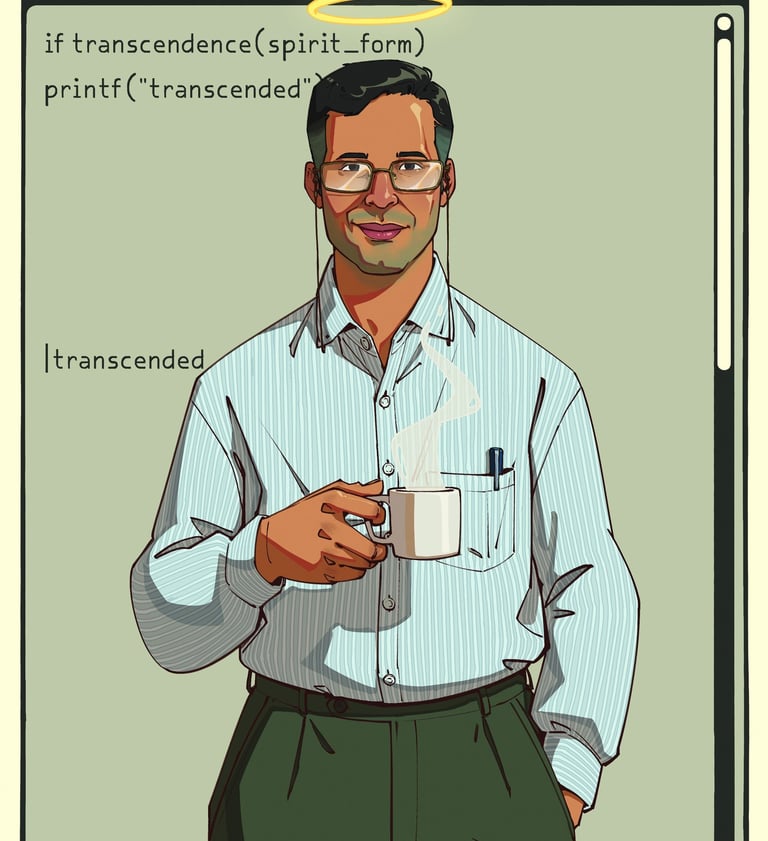
Coffee ran through his veins. You could probably take away his sleep, his socks, even a limb, but not his caffeine. He had this ability to appear calm on the outside, measured, mild but inside, he was a full-blown monsoon of opinions and emotions. He saved those inner tempests for car rides, where he’d call me mid-traffic and turn his steering wheel into a therapist’s couch. Traffic jam? Emotions jammed? Same thing.
Before dialysis entered the picture, he was my attender. Not just in the hospital sense — in the most sacred, wordless, everyday kind of love. He stood beside my bed (and my brother’s), joking, holding our hands, annoying us just enough to make us laugh. He was our unpaid emotional support system with no off switch.
But he didn’t stop with us. No. He’d make his rounds, talking to every patient nearby, cheering up even the tired nurses, lightening the room just by being in it. It was like he was running his own one-man wellness club on the dialysis floor. “If someone looks sad or lost,” he’d say, “just talk to them. Help them get their mind off things.” He didn’t wait for someone to be ready. He just showed up. Everyone knew him. Not as “Uncle.” As my father. And honestly, they weren’t wrong.
He had quirks — oh, so many. If your blood pressure dropped, he’d pick a fight to get it up. Completely unscientific. Deeply irritating. Shockingly effective. He argued passionately, spoke thoughtfully, and laughed generously. He’d arrive straight from work to dialysis, stomach growling, refusing to eat until I did. “If you eat, I’ll eat,” he’d say. Then pull out a bag of samosa and cherish the excitement on my face. I'd later find myself using the same dialogue on him saying "if you get a transplant, I will too"
He could read me and others like a book. He knew what made me tick, what made me cry, what made me go quiet. People confided in him before even confirming his name. He once comforted the attender of a coma patient, even invited her into spiritual practice after the patient passed. He was a companion to grief, a soft place for sorrow, a lighthouse in the weird sea of hospital chaos. Even for my father, he was a pillar of quiet, unwavering strength — shouldering responsibilities no one asked him to take, but he took anyway.
He was a believer — a Muslim but his faith was vast, expansive. He found solace in spirituality, not dogma. His search for truth was never-ending. He was a master practitioner of Reiki, so much so that when his car engine died, he’d perform energy healing on it. He talked to flowers. And they bloomed. I swear they bloomed. During Ramadan, he found his strength in faith. He fasted two full days despite being advised against it. He even came to visit us after Eid prayers - that was his last.
And while he teased and joked around, he felt everything. He carried pain in his bones and stored frustration behind his silences, only letting it slip when he thought no one was watching. But he was always watching us, me and my brother, protecting us in quiet, invisible ways.
After he passed, I found one voice note. It wasn’t about himself. It was just him asking how we were doing. That was so him, full of feeling, never seeking credit.
He cared for people, but more than that, he cared about them. He’d slip food to the hospital staff. Remember birthdays. Show up with little gifts. He made compassion look cool. He taught me care is in the tiny things: carrying my dialysis bag without being asked, waiting for me for hours without complaint (okay, maybe with a mini-fit). He started the trend of celebrating birthdays in Dialysis. Little moments of joy that made it easier to cope. He made showing up look effortless.
As his body began to falter, he quietly shrank into himself. Became more childlike, more vulnerable but never lost that twinkle in his eye. He found comfort in routine: same dialysis bed, same time of treatment, same idly plate.. He was an extroverted introvert: friendly to all, but confided only in me. I was his emotional diary. Proudly, willingly.
His marriage bore the weight of illness. It wasn’t easy. His wife came when she could, and love existed in quiet, fractured ways. But in the end, it was his mother he returned to. He became more vocal about his needs. Demanding a certain meal, a certain kind of attention. He worried —not about death, but about leaving her alone. He taught her how to do finances, encouraged her to build independence. And always, always asked us to call her at least once a day. “It would mean a lot,” he’d say.
Even when he could barely walk, he waited to see me at the hospital, even if just for five minutes, even if from a wheelchair. I wonder what it gave him, those moments, those small conversations. Maybe that was his dialysis too; a dose of human connection.
He was a full-time family man, part-time philosopher, and a textbook Sagittarius: forever right, often reckless, full of wild optimism. He once got into an imaginary race with a stranger on the road. Silent determination. No announcements. I clapped when he won. He feigned surprise. We both knew he wasn’t. And then there was his car rule — unspoken but consistent. If it was me and someone else, I got the front seat. Always. But if it was me and his mother? She got the front seat. Then his wife. Then me. It wasn’t favoritism. It was a quiet intention. He knew exactly how to make the women in his life feel important. Valued. Like they belonged beside him, not behind him.
Dialysis, though, is an expensive affair and he knew it. He worried constantly that the cost of staying alive might become a burden on those he loved. So he did what he always did: he quietly made himself smaller, trying not to take up too much space. He never bought anything for himself, never asked for more than he absolutely needed. And yet, without fail, he’d get me new clothes every Eid and birthday. And of course — a saree for my grandmother. That was non-negotiable.
It was never about the money. It was about making us feel remembered, celebrated, cherished. We still follow that rule.
He craved love. Gave it freely. Fiercely. And all he wanted was to be loved back, in loud, visible, unapologetic ways. In the end, when the body gave up, the soul stayed generous. A day before his passing, he called everyone — old friends, forgotten cousins — like he knew. Everyone but me. Maybe because he knew I wouldn’t let him go.
He passed on May 28, during COVID. No ambulance was ready. It was sudden and shocking. That night, I called him, intuitively. I remember telling my grandmother to put her hand on his heart. I didn’t know why. She didn’t know what was wrong. But I knew he needed that.
The doctors said it was a heart attack.
I used to tell him, “I need to get better because I want to look after you.”
But the truth is in his life and in his death — he never stopped looking after me.
He was my first teacher in grace. My lifelong supplier of humor, wisdom, and meaning. And now, my spirit guide with a halo and a coffee cup.